The 280-Page Academic Book on Electrolyzed Water: What It Teaches Us, Summarized in 10 Minutes
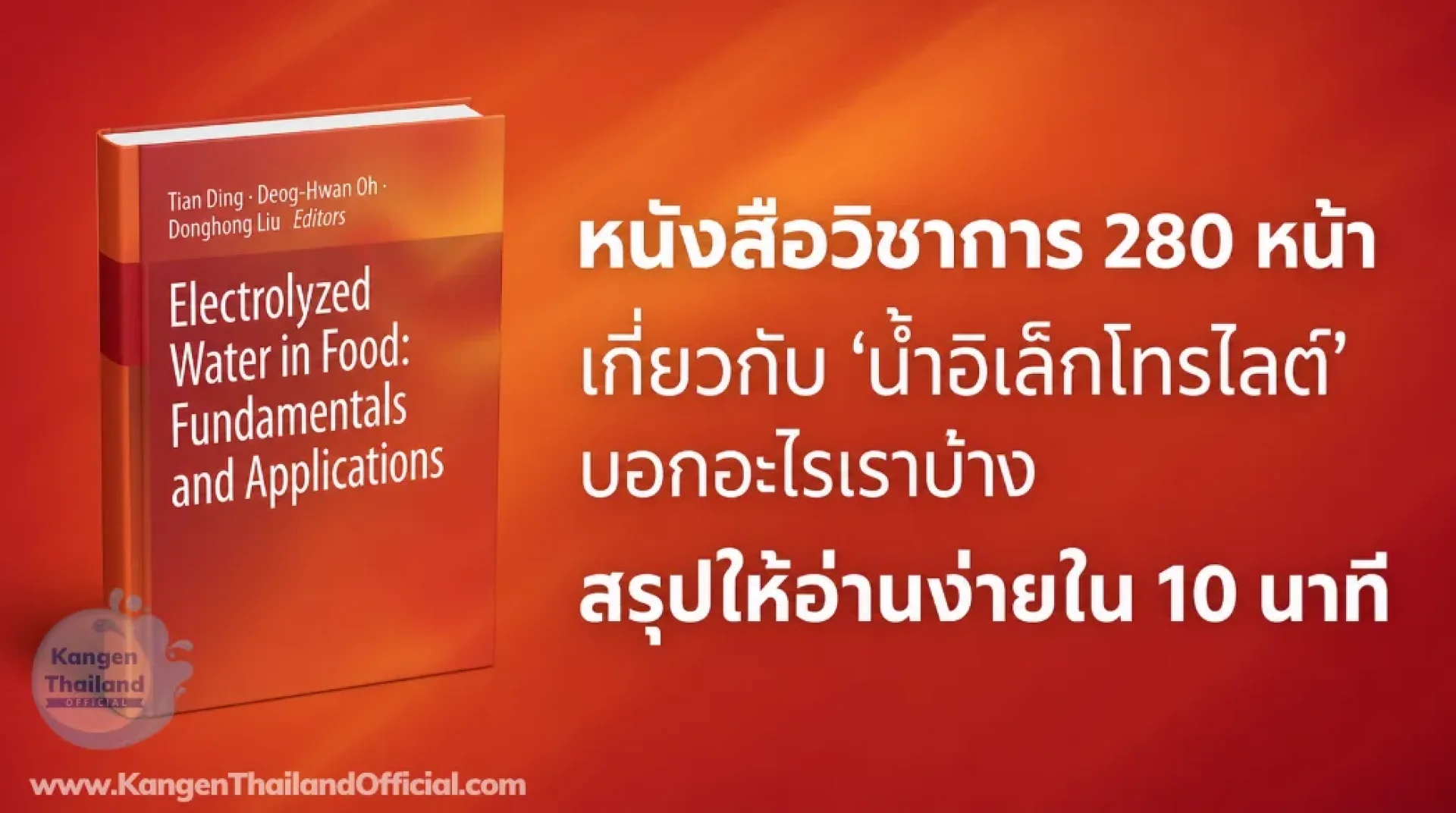
A 280-Page Academic Book on "Electrolyzed Water" - What It Teaches Us, Summarized in 10 Minutes
Back in 2020, when COVID-19 was spreading hard and alcohol sanitizer had disappeared from shelves everywhere, I did a deep dive into one question: does the Electrolyzed Water produced by our Kangen Water machines actually kill germs, for real? That search led me to a book that turned out to be exactly what I was looking for - a heavily research-focused academic text entirely about electrolyzed water. I ended up buying it as an e-book. Today I want to give you a short summary of what's actually inside it.
The book is called Electrolyzed Water in Food: Fundamentals and Applications, published by Springer Nature Singapore together with Zhejiang University Press in 2019, written by a team of researchers from universities and research institutes in China, South Korea, Iran, the United States, Bangladesh, and the Democratic Republic of Congo. Across 12 chapters and 280 pages, it dives deep into "Electrolyzed Water" - from how it's produced to its real-world applications across the global food industry. This article summarizes the key points of all 12 chapters in plain language, so you don't have to open all 280 pages yourself.
1. What Is Electrolyzed Water, and How Is It Made?
The principle is very simple: dilute salt water is passed through direct current electricity (the book cites roughly 9-10 volts) through a machine with a positive and negative electrode. The salt water splits into two types of water with completely opposite properties.
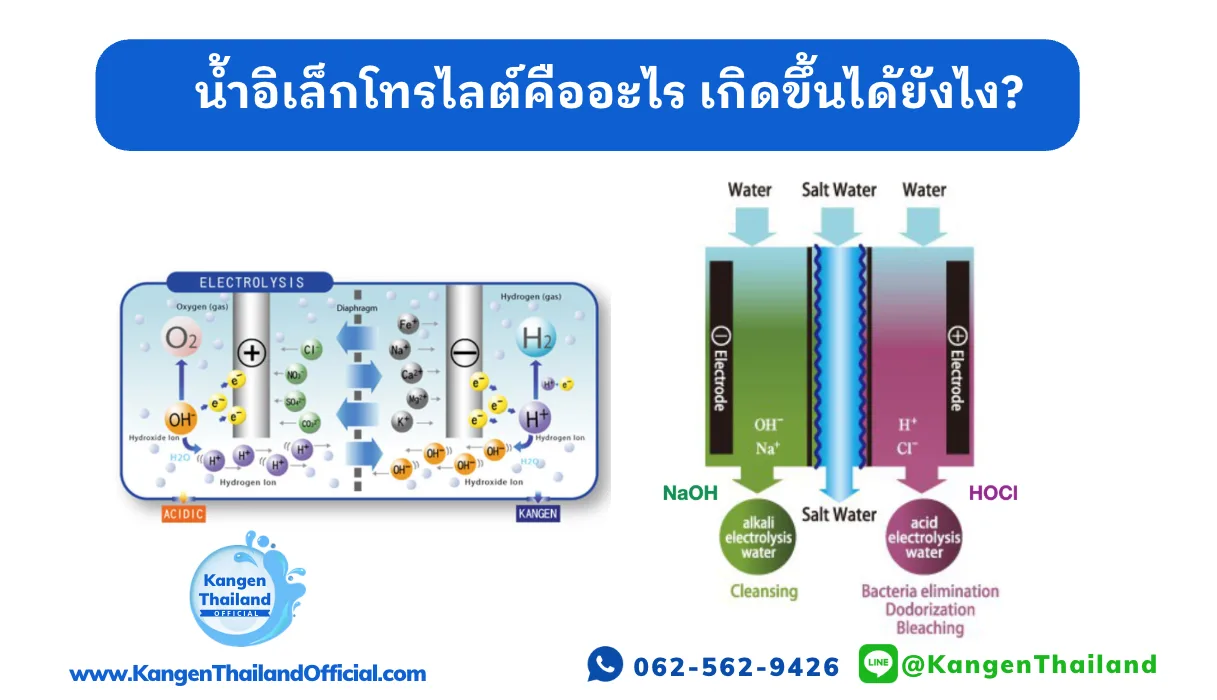
The book states that electrolyzed water is recognized as safe (GRAS - Generally Recognized As Safe) and is a legally registered food additive in the United States, Japan, and South Korea. Japan in particular - the Ministry of Health, Labour and Welfare (MHLW) - officially designated it as a food additive back in 2002.
2. Why Does This Water Kill Germs?
The book compiles research tested against major foodborne pathogens such as E. coli, Listeria monocytogenes, Salmonella, and Staphylococcus aureus. It found that disinfection efficacy is determined by three main variables: low pH, high Oxidation-Reduction Potential (ORP), and high Available Chlorine Concentration (ACC). The more these values sit in the right range, the more effective the disinfection. The most potent form of chlorine is hypochlorous acid (HOCl), which is most abundant in water with a pH of around 5-6.5.
3. Does It Really Remove Pesticide Residue From Vegetables?
Chapter 3 is dedicated entirely to this question. In short: alkaline electrolyzed water with a pH close to Strong Kangen Water (around 11-12) has published research confirming it removes pesticide residue from vegetables better than plain water, saltwater, or vinegar. For example, one study washing spinach and cabbage reduced residue by 46-86%. (For the full deep-dive, see the "Chinese Cabbage Formalin" article published earlier.)
4. How Is It Used With Fruits and Vegetables in Industry?
Beyond disinfection and residue removal, the book states that electrolyzed water also plays a major role in extending shelf life and preventing physiological disorders in produce after harvest (postharvest quality) - such as slowing spoilage and reducing wilting. It's widely used in fruit and vegetable processing plants, not just as a cleaning agent.
5. How Well Does It Work on Meat and Poultry?
Research compiled in the book found that spraying acidic electrolyzed water on fresh pork surfaces significantly reduces E. coli and Listeria counts, and it's widely used in beef, poultry, egg processing, and food-processing equipment sanitation.
A limitation the book states directly: acidic electrolyzed water at very low pH (2.2-2.7) can corrode metal equipment, and the free chlorine at that level can cause cytotoxicity if misused. Concentration and usage method must be properly controlled for the industry involved, not used at will.
On the topic of "concentration" - many people mistakenly believe that the higher the free chlorine (ACC, in ppm), the better the disinfection. This is a misconception. The Japan Electrolyzed Water Association (JEWA)'s website states that to meet the standard of Japan's Ministry of Health's "Mass Catering Facility Hygiene Management Manual," a concentration of 100-200 ppm is required.
The reality: too high a ppm does kill germs well, but isn't safe for food-industry use or direct body contact. Too low a ppm, and it won't disinfect effectively. So before choosing any brand or model of electrolyzed water machine, always understand the production principle and the actual concentration that specific model produces - don't choose based purely on the highest ppm number advertised.
6. Can It Be Used on Seafood?
Seafood carries its own specific pathogens, such as Vibrio parahaemolyticus, which causes diarrhea, vomiting, and headaches. The book compiles research testing electrolyzed water's effectiveness against this pathogen group specifically on seafood, finding satisfactory results in reducing pathogen counts.
7. Can It Disinfect Factories and Environments?
Beyond direct food use, the book also covers using electrolyzed water to clean the environment in food factories and livestock farms - through rinsing, spraying, and clean-in-place systems. Spraying is especially used in poultry and livestock housing, where it helps reduce airborne dust and bacteria, improving air quality in the housing.
8. How Well Does It Work on Livestock Farms and Slaughterhouses?
In slaughterhouses, pathogen contamination during carcass processing is often caused by inadequately cleaned equipment. Research compiled in the book found that oxidizing electrolyzed water is a viable alternative to iodophor, the traditional disinfectant used in small-to-medium slaughterhouses, and it's also used to reduce Campylobacter on poultry carcasses during processing.
9. Can It Be Used in Agriculture? Not Just for Washing Vegetables
One of the more interesting parts: the book has a chapter on using electrolyzed water as an antifungal agent in crop fields, to reduce chemical fungicide use. For example, research spraying near-neutral-pH electrolyzed water to control gray mold disease in strawberries found it effective without being phytotoxic to the plant, and there's also experimental use controlling powdery mildew in cucumbers.
10. Does Combining It With Other Techniques Improve Results?
The book has a dedicated chapter on combining electrolyzed water with other techniques (called Hurdle Technology, or a "multi-layer barrier" approach) - for example, combining it with ultrasound to boost disinfection efficacy beyond what electrolyzed water alone achieves. The main mechanism explained is that hypochlorous acid (HOCl) attacks the cell wall, cell membrane, DNA, and enzymes of microorganisms, ultimately killing them.
11. Is This Water Really Safe for Food and the Body?
This is the question people worry about most, and the book has an entire chapter dedicated to safety evaluation. One interesting result: washing spinach with electrolyzed water (ACC around 70 mg/L) found no significant reduction in the vegetable's vitamin C content compared to washing with plain tap water, and no significant increase in free radicals or trihalomethane compounds in the food either.
On the legal and regulatory side, the book states that Japan's Ministry of Health, Labour and Welfare (MHLW) has designated electrolyzed water as a food additive since 2002. In the United States, the Department of Agriculture (USDA) permits hypochlorous acid from electrolyzed water as a sanitizer in organic crop and livestock production, and Canada's Organic Federation grants similar recognition.
There's one important caveat specifically about strong alkaline electrolyzed water (pH 11 and above, like Strong Kangen Water). JEWA's website states directly, in its Q&A page, that per Japan's Mass Catering Facility Hygiene Management Manual, washing food ingredients must use "food-production-grade water" only - so strong alkaline electrolyzed water is not permitted as the final step of direct food contact, whether as a final wash or as a processing aid. If used to wash food ingredients at all, it should only be used as a preliminary pre-wash step, at the user's own discretion, always followed by a final rinse with clean water - consistent with the method recommended in the earlier "Chinese Cabbage Formalin" article.
12. What Does the Future Hold for This Technology?
The book's final chapter looks ahead, noting that electrolyzed water's key strength is that it can be produced on-site - no need to transport or store hazardous chemicals like traditional chlorine, making it more convenient and safer. That said, the authors acknowledge remaining obstacles: relatively high initial equipment costs, and still-limited consumer understanding of the technology. Overall, though, the book concludes that the future outlook for this technology in the food industry is "very promising."
Overall Summary
Having gone through all 12 chapters, what this book tells us most clearly is that electrolyzed water isn't a new technology or a marketing trend - it's a technology backed by decades of research, genuinely used across the global food industry, from fruit and vegetable processing plants, slaughterhouses, and livestock farms, all the way to organic farms, and recognized by regulatory bodies in multiple countries. It splits cleanly into two groups with clearly different jobs: acidic water, which excels at disinfection, and alkaline water, which excels at removing oily residue and chemical residue.
The Kangen Water ionizer machines used in households run on the exact same electrolysis principle this book explains, producing both acidic electrolyzed water (Strong Acidic Water) and alkaline electrolyzed water (Strong Kangen Water pH11.5) from a single unit. For more information about Kangen Water ionizer machines, contact Kangen Thailand Official, an authorized distributor, today.